The Coalition is now a minor party and One Nation is the alternative government, and the Roy Morgan numbers have stopped being a protest
The Roy Morgan numbers published on the weekend show One Nation projecting between 53 and 64 seats at a federal election held today. The Coalition projects to fewer seats than that. The implication, made explicit on the Rita Panahi programme on Sky News on Tuesday, is that the Coalition is now polling as a minor party against the major right of centre force, and that force is no longer Liberal or National. "The coalition is a minor party on those numbers," Patrick Carlyon said on the show. "One Nation projecting 53 to 64 seats. I mean, that is massive. And this has happened, what, in eight months, nine months?" (
Institute of Public Affairs, 23 June 2026).
The Institute of Public Affairs research fellow on the same panel, Colleen Harkin, used a word the major parties have so far avoided. "If you peg it to Bondi or just before then, I mean, this is cataclysmic in its proportions and Labour is struggling too. The mainstream parties don't know how to fight it." Harkin then said the line that should worry both major parties most. She has joined One Nation. "I've been politically active all my life. I'm interested in good policy for the betterment of our country and I'm the kind of person who'll just put my hand in and help. Yeah, I've joined." That is not a person walking out of a Coalition branch in disgust. That is a senior right of centre policy operator deciding that the One Nation room is where the work is being done. (
Institute of Public Affairs, 23 June 2026).
The polling beneath the seat projection is the part the major parties cannot afford to misread. The Nine papers commissioned a separate survey last week, hoping for very different results. What the survey found, on Harkin's account, was that 28 per cent of first generation migrants backed One Nation against 29 per cent of Australian born voters. "Almost identical," she said. "Again, that notion that this is some racist party for old white men is absolutely false." The political shorthand the major parties have been using on One Nation, the shorthand that pretends the vote is an angry monoculture from the bush, has stopped describing the data. (
Institute of Public Affairs, 23 June 2026).
The other thing the Roy Morgan numbers do is collapse the old Coalition strategy. For two decades the Liberal Party has run on the assumption that there is an outer suburban vote and a teal inner urban vote, and that the outer suburban vote will always come home if One Nation is run hard against Labor. That was the assumption behind preference flows in 2022, behind the "we are the only sensible right" framing in 2025, and behind the increasingly anxious internal polling that has emerged through May and June. If One Nation is winning between 53 and 64 seats outright, the preference flow does not matter. The Coalition is not the preference recipient. It is the preference donor.
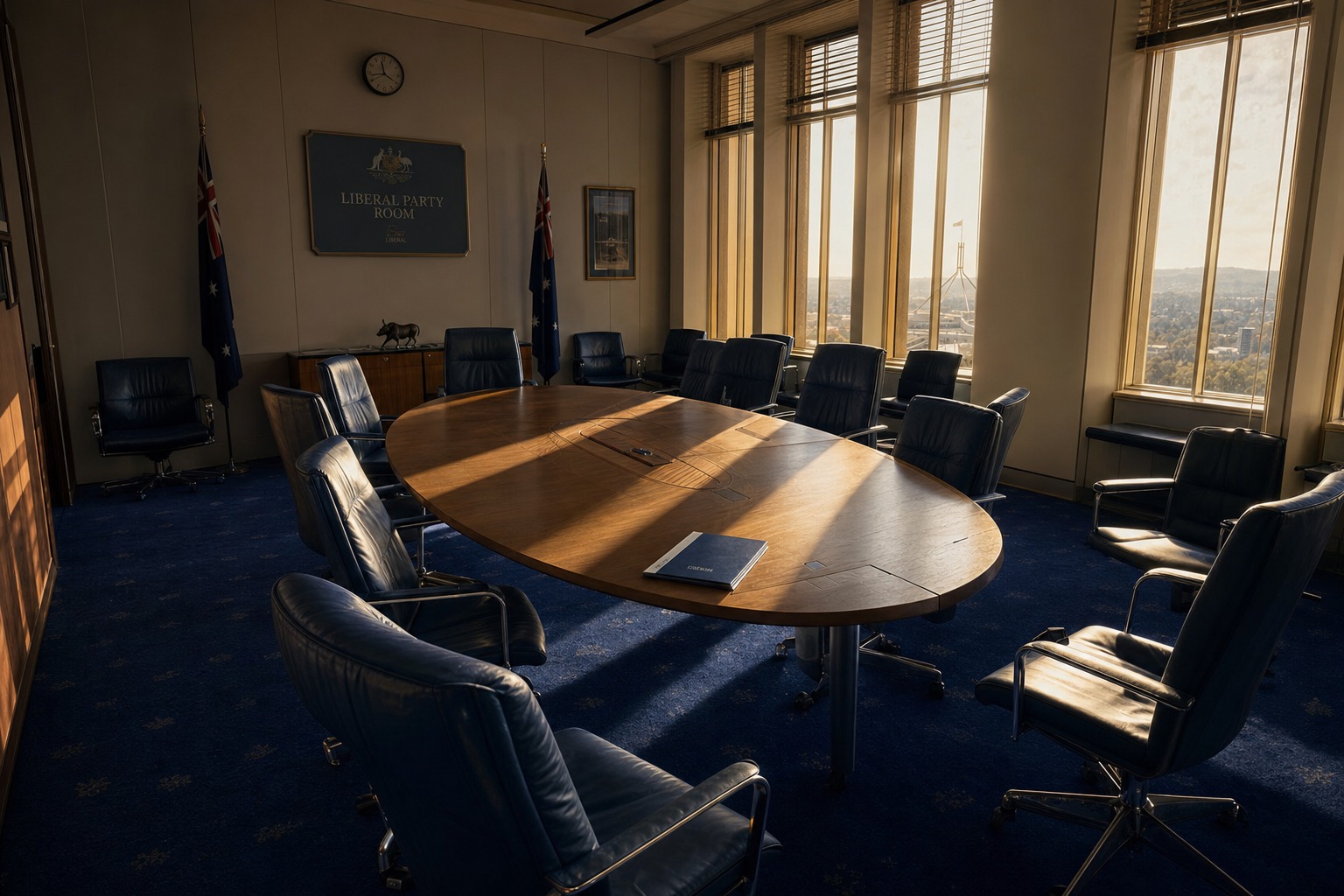
This is the moment the Liberal Party machine has spent twelve months trying to talk itself out of. The two main reactions have been denial and condescension. Denial has been the National Press Club speech from a former Coalition heavyweight last week, the line that the vote will fall back into the Coalition column once the Albanese government is gone. The data does not support that. Condescension has been the line from inside the Liberal Party that One Nation voters will return to the Coalition once they are reminded that One Nation is unserious. The 28 per cent first generation migrant figure says they are not coming back, and they do not think the party is unserious.
What does this mean for the next election cycle? Three things. The first is that the Coalition cannot run a "two party preferred" campaign in 2027 if One Nation is the principal opposition. The Coalition has to negotiate a coalition with One Nation before nominations close, or it has to accept that it will be a minor party in the new Parliament. The second is that the Labor side of the chamber has to stop running its own polling against the Coalition baseline. Labor's vote is below 30 in the same Roy Morgan, and the projection of 53 to 64 One Nation seats requires Labor to lose seats on both sides of the chamber. The third is that the entire Australian political vocabulary of "the Coalition" as the right of centre alternative to Labor is, for now, defunct.
Harkin's exit from the Liberal world is the smaller story. The larger story is that the Liberal world has been ceding the brand of right of centre seriousness to One Nation at roughly half a percentage point a month for the last nine months, and the seat translation has caught up with the primary. Tuesday's reaction inside the Coalition party room, on Sky and elsewhere, was a mixture of fatalism and grievance. Neither will fix the problem. What might fix it is admitting that the working assumption of the last twenty years, the assumption that the Liberal Party owns the right of centre vote by default, has been wrong since at least mid 2025.
The thing about a Roy Morgan number this severe is that it cannot be argued out of by reference to methodology. Roy Morgan has been polling the right of centre vote in Australia for the better part of a century. When their seat projection puts One Nation between 53 and 64 seats, that is not a methodological artefact. It is the data the major parties commissioned and now refuse to read.
RELATED ARTICLES

Our platform covers everything from global events and politics to entertainment, technology, and lifestyle, ensuring you never miss a story.