Keir Starmer told the House on Monday that he was resigning, and Britain will soon have its seventh prime minister in ten years
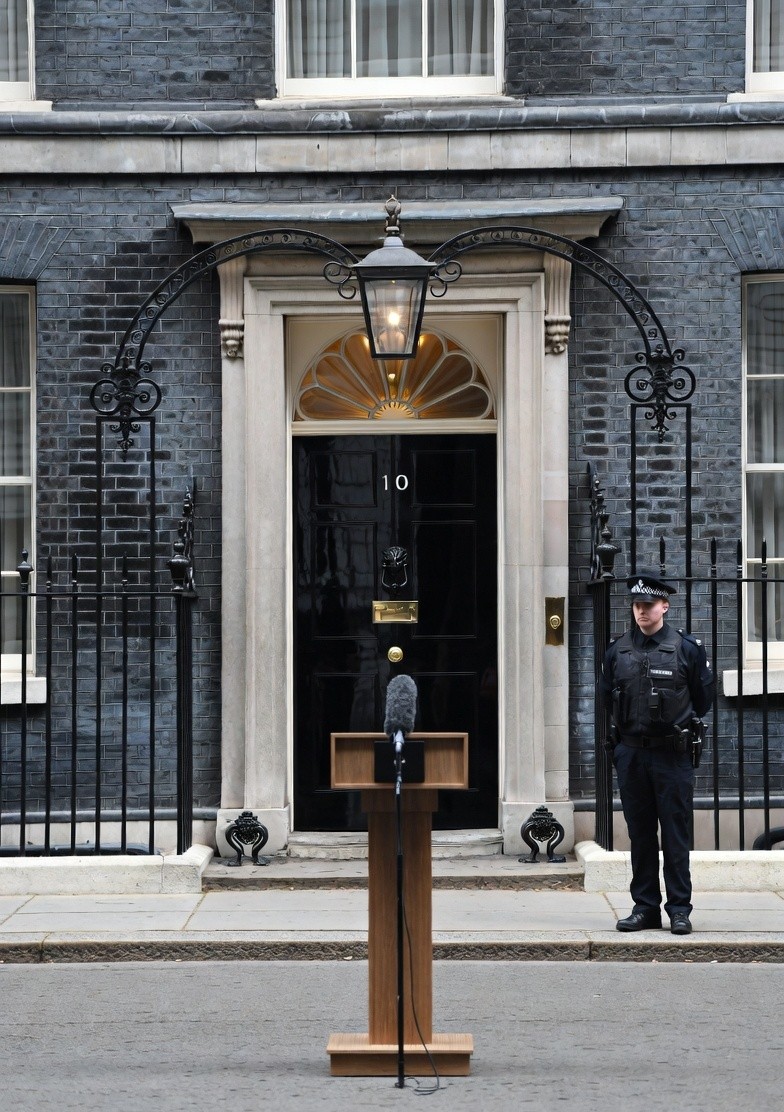
There is something orderly, almost gentle, about how the British system disposes of its prime ministers. The papers had been writing about it for a fortnight. The Burnham camp had been meeting publicly on Friday. The Sky News overnight bulletin on Monday morning treated the resignation as effectively decided, expected by the start of the parliamentary week. On Monday evening, in the chamber, Keir Starmer rose and said the words the British constitution requires. He would resign. He would offer his successor "my full and unequivocal support". He would, he said, leave behind a Britain "far stronger and fairer than the one I inherited two years ago." (Institute of Public Affairs, 23 June 2026).
That last sentence is the sentence the British public did not believe. The Roy Morgan equivalent in Britain, the YouGov tracker, has Starmer as the most unpopular British prime minister of the modern era. He won a landslide majority in July 2024. He carried that majority into the welfare reform fight, then the energy bills crisis, then the deputy prime minister's tax scandal in which Angela Rayner lost her job, then the immigration figures, and out the other side as a leader who could not move a backbench vote on a Tuesday. His own party, by Friday, had stopped pretending that the polling could be turned around in a year. Andy Burnham, the Mayor of Greater Manchester, who has not been a Member of Parliament since 2017, had begun meeting with shadow cabinet members in central London on the assumption that the leadership would open within weeks. By Sunday, it was clear. By Monday, it was done.
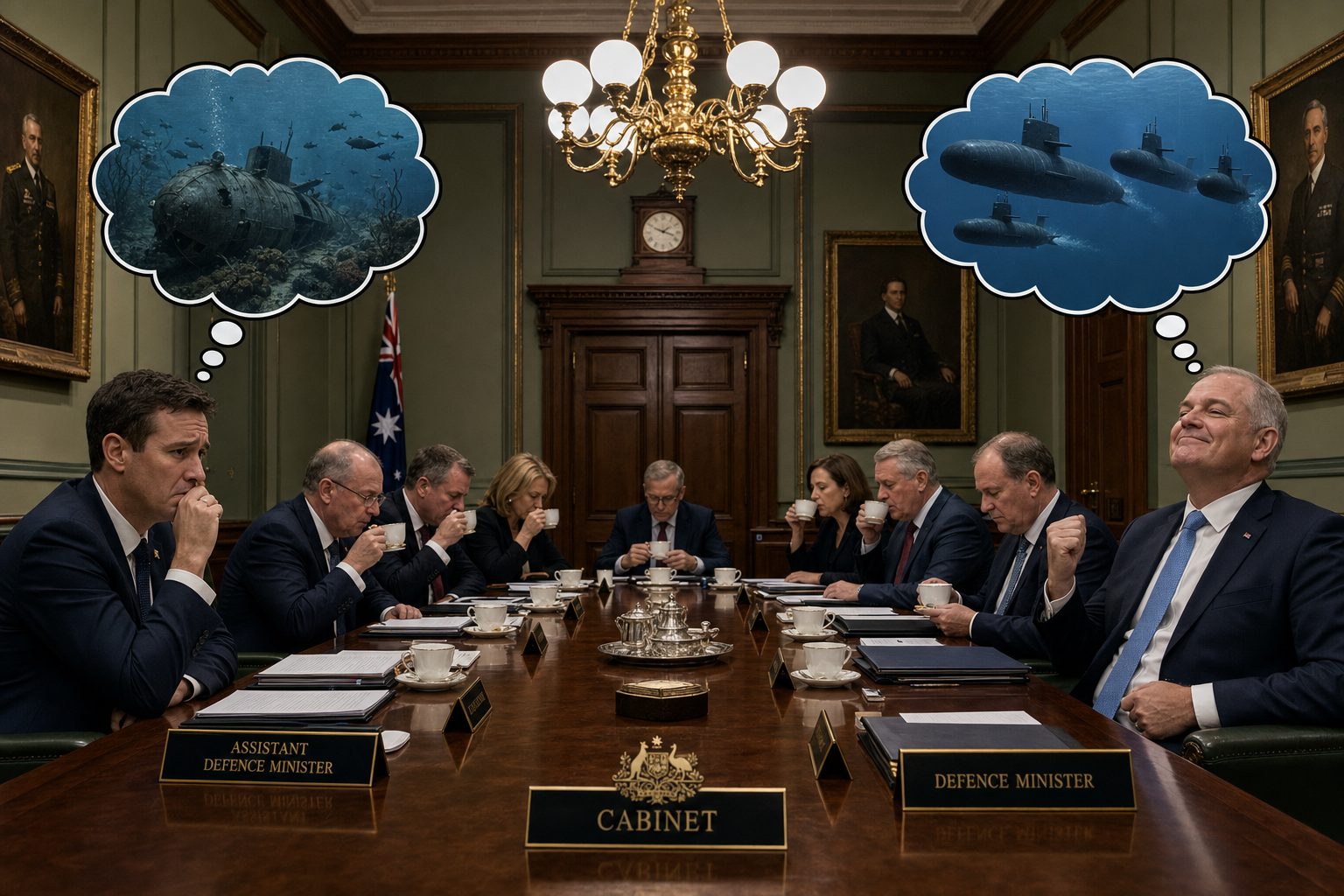
The Australian foreign policy interest in this is more than tabloid. Richard Marles, asked on Sky News First Edition on Tuesday morning about the AUKUS partnership after Starmer's announcement, gave the careful answer of a minister who has been preparing for the question for a fortnight. "Keir Starmer has been a great friend to Australia. We are very appreciative of his partnership across the relationship, but specifically in issues such as AUKUS." Marles continued: "AUKUS will remain unchanged and AUKUS is happening at a pace and I think that's an important point to make." (Defence Ministers, 23 June 2026).
The "happening at a pace" line is the diplomatic shorthand for the eleven billion pound annual British submarine programme already under contract. Whichever successor takes the Number 10 door, the AUKUS commercial chain has been baked into the British defence procurement system to a point where unwinding it is harder than continuing. That is also why Marles, who is technically Australia's Deputy Prime Minister and Defence Minister, has been the first senior Australian voice on the British transition. He is, in effect, telling London that whoever takes the keys will inherit a working programme they cannot back away from without a domestic industrial dispute on their hands. That is a calmer message than the one the Australian press has been running.
The deeper point about the Starmer resignation, the point that sits below the leadership timetable, is what it says about the modern democratic incumbency penalty. Starmer is the fifth Western leader since 2024 to win a clear majority, govern through a single budgetary cycle, and then face an unrecoverable polling collapse. Joe Biden left office on a similar trajectory. Olaf Scholz left office on a similar trajectory. Justin Trudeau left office on a similar trajectory. Anthony Albanese, in the Roy Morgan data, is trending toward a similar trajectory. The shared diagnosis is not policy. The shared diagnosis is that the cost of living shock of 2022 to 2025 has destroyed the political reflex by which voters give a new government three or four years to find its feet. The reflex now is shorter. Sometimes it is one budget.
What that means for the next Number 10 occupant, whoever it is, is that the early decisions are not optional. Britain has to decide whether to push back on the European Union summit timetable, now in doubt after the resignation, whether to continue or reset the UK's contribution to the war in Ukraine, and whether to honour the 250 day grace period on the Iranian Versailles memorandum. The successor will not have the political capital of a new election. They will have the political capital of one polite week of national breathing space, and then the same fiscal arithmetic Starmer faced.
By September, on the timetable Reform UK was quoting on Tuesday, Britain will have had seven prime ministers in ten years. The number is the kind of number Italian and Israeli political science used to specialise in. The British constitution is now producing it because the British electorate has, in the polite phrase, no time left for a leader who does not deliver on the first budget. That is not a failure of one prime minister. It is a structural fact about the rolling cost of living crisis. Anthony Albanese watched the resignation on Monday evening from his office in Canberra. By Tuesday afternoon he was at the lectern, announcing a tax package the Senate had reluctantly approved. He understands the timetable better than anyone in the Commonwealth. He understands that the first budget is the one the voter remembers.
Whoever succeeds Starmer will inherit a country that the IPA panel on Tuesday described, perhaps unkindly but not inaccurately, as having "more welfare recipients in Britain now than taxpayers." (Institute of Public Affairs, 23 June 2026). Whether or not the figure is exact, the political condition it describes is real. The successor's job is to break the figure or to lose to whoever, eventually, will. That is what the Westminster system now requires of new leaders. It is a faster, harder requirement than it used to be, and it is the new normal for every prime minister and every premier in the English speaking world.
RELATED ARTICLES


Our platform covers everything from global events and politics to entertainment, technology, and lifestyle, ensuring you never miss a story.