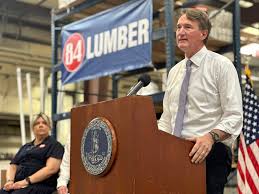
In the rolling hills of Virginia, where the Shenandoah River carves its ancient path through the blue ridges, there's a quiet revolution underway—not one of muskets or manifestos, but of paperwork and policy, the kind that binds a man's hands as surely as a storm-tossed sea lashes a lone fisherman to his deck. It's here, in this old commonwealth, that Governor Glenn Youngkin cast his line into the tangled weeds of regulation, hauling back not just a few stray rules, but a whole netful of burdens that had long snagged the lives of ordinary folk. His Executive Order 19, issued in the crisp air of June 2022, wasn't a grand proclamation from on high; it was more like the steady work of a tide turning, eroding the excesses that had piled up over years, much like silt in a neglected estuary.
Youngkin, a bloke with the cut of a pragmatic skipper navigating choppy waters, didn't set out to dismantle the lot. No, he aimed for something subtler, more enduring: a 25 per cent cut in the regulatory load, not by counting the rules like so many shells on a beach, but by measuring the real weight they carried—the hours squandered on licences, the costs that pinched small businesses like salt in a fresh wound. He birthed the Virginia Office of Regulatory Management, a watchful outfit modelled on the federal Office of Information and Regulatory Affairs, with Deputy Director Reeve T. Bull at the helm, steering it through the murk. This ORM isn't some distant lighthouse; it's right there in the fray, reviewing every proposed rule from the first whisper of intent, demanding a proper reckoning of costs and benefits before anything sets sail.
Think of it: a barber's licence that once demanded a thousand hours of training now trimmed by a third, not scrapping the requirement altogether, but easing the drag, letting a young lad get to work without the endless grind. Bull himself put it plain: if an agency shaves those hours, “the agency … has not eliminated any regulatory restriction, but it has significantly reduced a regulatory burden.” It's this focus on the human toll—the indirect costs, the market twists, the way rules disproportionately batter the little bloke with his corner shop or his family farm—that sets Virginia apart. Every new regulation, even those sly guidance documents that slip through cracks elsewhere, must pass a stern cost-benefit muster, tallying not just the dollars but the distortions, the way a poorly thought-out rule can ripple out like a stone skipped across a still pond, unsettling everything in its wake.
The fruits of this labour are already budding. A leaner regulatory regime promises a heartier economy, where workers aren't bogged down in red tape, consumers find prices less inflated by hidden levies, and small enterprises can breathe freer, expanding like vines in fertile soil. It's no abstract dream; federal follies serve as cautionary tales—rules on gender pay gaps that balloon to billions in unseen costs, or energy edicts that jack up the price of a simple dishwasher or light bulb. Virginia's path sidesteps such pitfalls, insisting on rigour from the outset, transparency woven into the fabric like threads in a well-worn quilt.
And why should this matter beyond the Potomac's banks? Because Virginia stands as a rare sentinel in a landscape littered with half-measures. Only a handful of states—Arizona, California, Colorado—boast anything akin, with agencies that dive in early and demand full accountability. Most others drift along, their regulations accumulating like driftwood after a flood, unchecked and unmeasured. Youngkin's model isn't about slashing wildly; it's about discernment, about recognising that good governance, like a well-tended garden, thrives when the weeds are pulled with care, allowing the true growth to flourish.
In the end, as the sun dips low over Virginia's verdant fields, one can't help but see this as a call to other states, weary under their own loads, to follow suit. It's a reminder that freedom isn't just the absence of chains, but the space to move, to build, to endure. If the rest of America heeds this quiet example, perhaps the whole nation might find its footing anew, steady against the gales of overreach, charting a course towards something simpler, stronger, more alive.

.png)

