Australia's Economy Grapples with Stubborn Inflation and Rate Hike Reversal
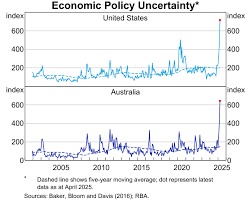
Australia's economy, once buoyed by post-pandemic recovery measures, now faces a challenging landscape marked by resurgent inflation, a surprise interest rate hike, and sluggish productivity growth. The Reserve Bank of Australia (RBA) has reversed course on its easing cycle, lifting the cash rate to 3.85 per cent in early February, signalling that price pressures remain more persistent than anticipated. This move, the first increase since late 2023, underscores the difficulties in balancing economic expansion with inflation control, particularly as government spending continues to prop up demand.
In the final quarter of 2025, headline consumer price inflation climbed to 3.8 per cent year-on-year, up from 3.4 per cent earlier in the year, driven largely by housing costs, food prices, and utilities. The RBA's preferred measure, trimmed mean inflation, hovered at around 3.3 per cent, well above the central bank's 2 to 3 per cent target band. Forecasters now expect core inflation to linger at 3.2 per cent by the end of 2026, with headline rates moderating only gradually to about 3.0 per cent. This sticky inflation has been attributed to a mix of factors, including low unemployment fuelling wage growth, tax cuts boosting consumer spending, and expansive fiscal policies that some critics argue are overheating the economy.
Economic growth, while positive, remains modest. Gross domestic product (GDP) expanded by 1.4 per cent in the 2024-25 financial year, with quarterly growth in the September period at 0.4 per cent. Projections for 2026 point to annual GDP growth of around 2.1 to 2.2 per cent, supported by resilient household consumption and robust public investment. However, this pace is below potential, constrained by weak productivity gains and supply-side bottlenecks. Private sector activity has been the primary driver, with household spending rising 0.5 per cent in the September quarter, though much of this reflects essential rather than discretionary purchases. Government expenditure, including infrastructure projects and consumption, contributed significantly, adding 0.4 percentage points to GDP growth in that period, raising questions about the sustainability of such fiscal support.
The labour market continues to exhibit strength, with the unemployment rate dipping to 4.1 per cent in recent months, though it is expected to edge higher to 4.3 to 4.4 per cent by year-end 2026. Participation rates remain near record highs at approximately 67 per cent, bolstered by sectors like healthcare and the National Disability Insurance Scheme. Real wages have grown for eight consecutive quarters, providing relief to households burdened by high debt levels. Yet, this tightness in the job market is exacerbating unit labour costs, which surged 5.4 per cent annually in the September quarter, far outpacing productivity growth of just 0.4 per cent. Economists warn that without productivity improvements, the economy risks being "boxed in by its own capacity constraints," limiting long-term growth potential.
The RBA's decision to hike rates has drawn mixed reactions. Governor Michele Bullock emphasised that inflation's rebound stems from multiple sources, not solely government spending, but acknowledged the role of strong demand in perpetuating price rises. Market participants now anticipate further tightening, with some forecasts suggesting additional hikes through 2026 and into 2027. This shift comes after three rate cuts in 2025, which had lowered the cash rate to 3.6 per cent before the recent reversal. Critics, including libertarian economists, argue that excessive government intervention, through subsidies and infrastructure outlays, is distorting market signals and contributing to inflationary pressures that necessitate higher rates, ultimately burdening private enterprise and households.
Looking ahead, the outlook is cautious. The RBA projects GDP growth to slow below trend from late 2026, with unemployment rising gradually to 4.6 per cent by mid-2028. Inflation is not expected to return to the midpoint of the target until 2028, prompting concerns about prolonged high borrowing costs. The federal government's Mid-Year Economic and Fiscal Outlook revised the 2025-26 deficit down to $37 billion, thanks to stronger tax receipts, but public spending as a share of GDP has rebounded to near-record levels at 28.5 per cent. For Australia to achieve sustainable growth, reforms aimed at boosting productivity, such as deregulation and tax simplification, will be essential. Without them, the economy may remain trapped in a cycle of government-led stimulus and reactive monetary policy.
As global uncertainties, including trade tensions, linger, Australia's reliance on exports like commodities could provide a buffer, but domestic challenges demand a freer market approach to unleash innovation and efficiency. Libertas News will continue to monitor these developments, advocating for policies that prioritise individual liberty over state expansion.
RELATED ARTICLES

Our platform covers everything from global events and politics to entertainment, technology, and lifestyle, ensuring you never miss a story.